What drives decisions in Little Rock
Aerial work in Little Rock tends to split into two patterns:
- Flat-slab interiors where low ground pressure and compact turning matter more than gradeability.
- Sloped or uneven exteriors on mixed soils where tire type, oscillation, and stabilizing features affect which class of lift makes sense.
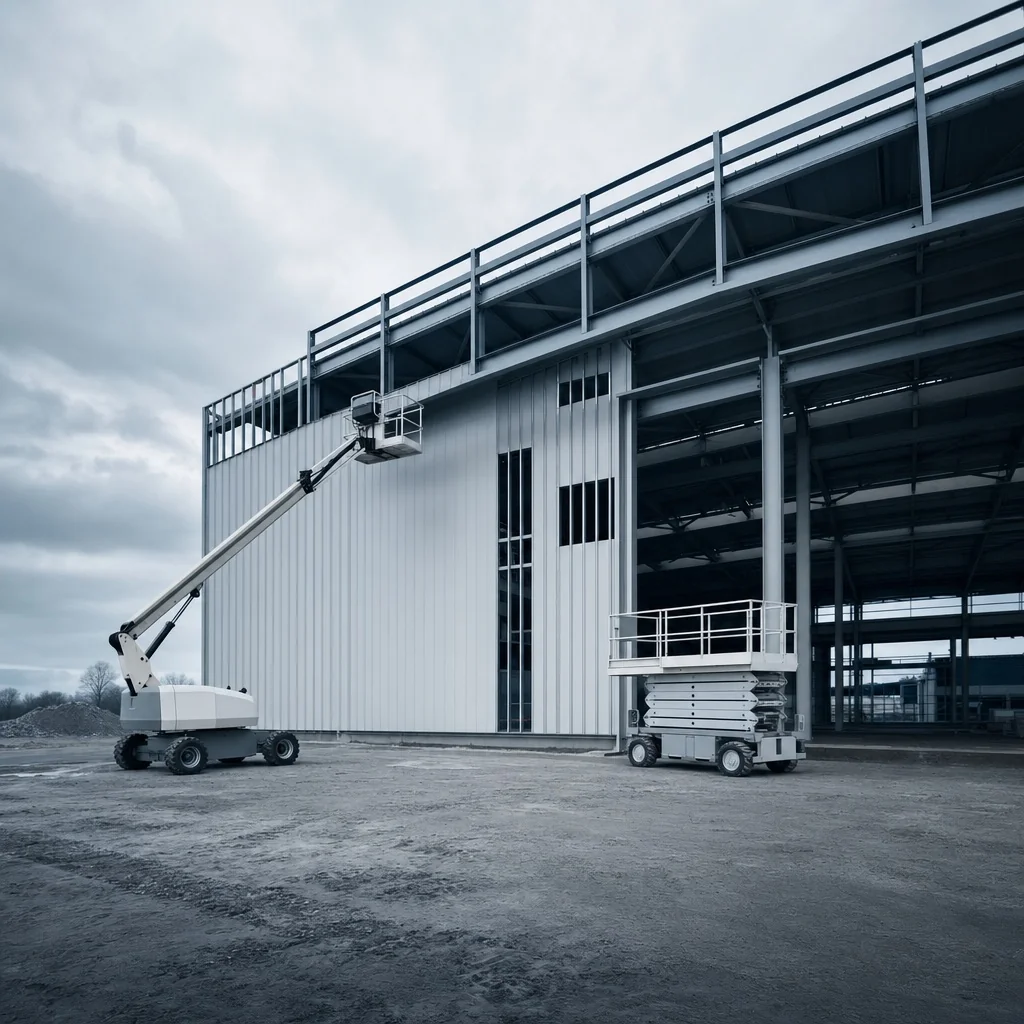
Electric scissor lifts often match the smooth floors and tight aisles found in local distribution buildings. Rough-terrain scissors, articulating booms, or vertical masts address work along varied elevations in suburban commercial corridors.
How we frame equipment comparisons
Instead of generic specs, the comparisons start with three questions:
- Can the machine sit below the task? If the work is directly overhead on a smooth slab, an electric scissor provides vertical reach with compact width. If the task overhangs an obstacle, an articulating boom may be required.
- What does the surface allow? Wet or soft ground common after regional rain events pushes decisions toward rough-terrain scissors or telescopic booms with appropriate flotation and grade capability. Interior maintenance steers to electric units with non-marking tires.
- How far and how high? Straight-line reach to a facade often points to a telescopic platform, while complex rooflines and canopies favor an articulating platform.
Where this helps locally
- Large-format interiors: pick platforms by aisle width, floor loading, and lift height, then check turning radius around pallet racking and mezzanines.
- West-side developments: evaluate slope percentages at parking lots and retaining walls; match to lift grade limits and stabilizing features.
- Facility upgrades: for frequent up-and-down tasks, a vertical mast can reduce repositioning compared to ladders.
Explore related categories on the products page or reach out on the contact page.