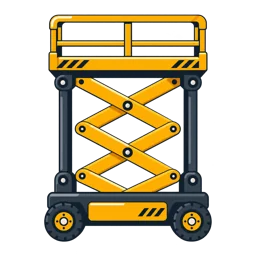
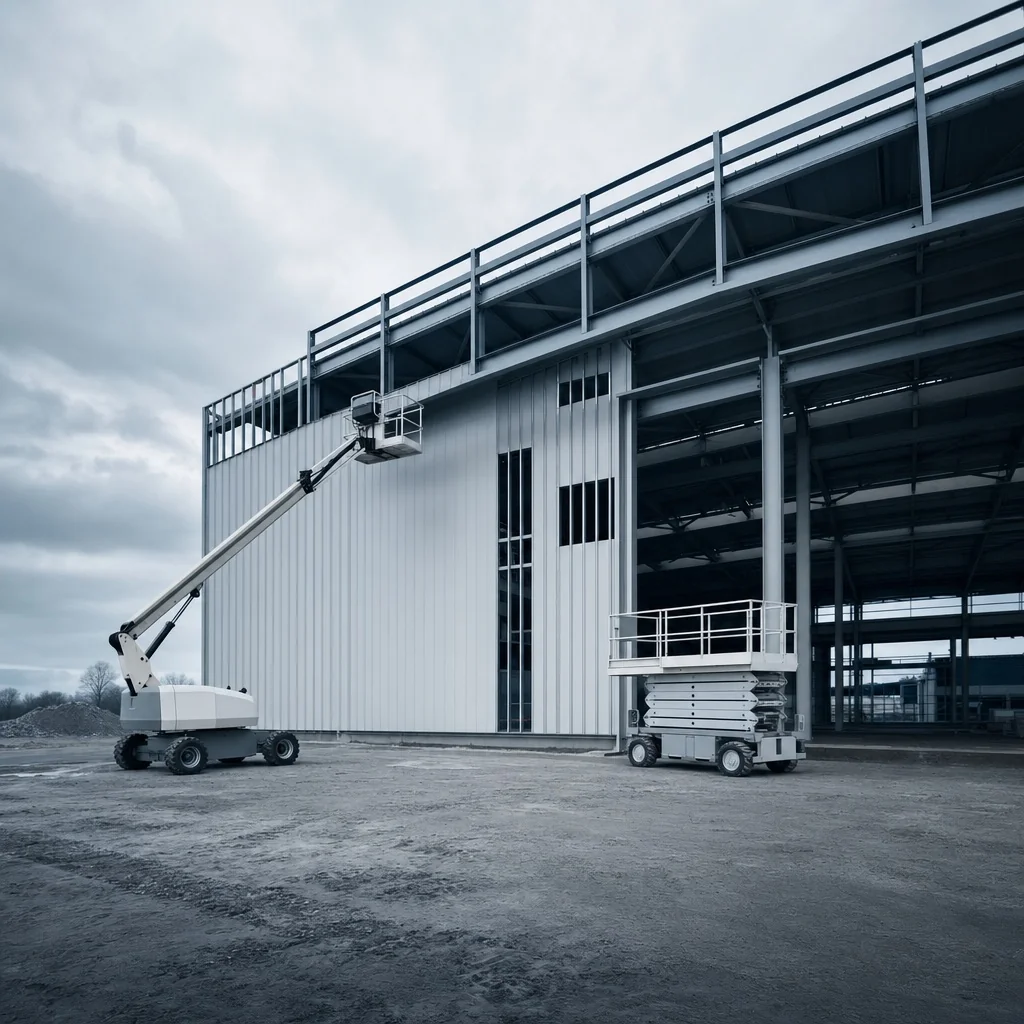
Scissor lifts for straight vertical work
When the platform can sit directly below the task on slab, electric scissors are efficient and quiet for interior maintenance in distribution and healthcare spaces. See /electric-scissor-lift-rental/. For exterior or uneven ground, rough-terrain scissors handle grade changes and softer surfaces common west of town; see /rough-terrain-scissor-lift-rental/.
Key factors: - Floor load limits, aisle width, and door clearances - Outdoor slope, tire type, and ground-bearing capacity after storms
Booms for outreach over obstacles
If the machine cannot sit below the task, booms provide horizontal reach. Articulating booms navigate around façades and mechanicals (/articulating-boom-lift-rental/). Telescopic booms reach farther across laydown yards and industrial aprons (/telescopic-boom-lift-rental/). General options overview at /boom-lift-rental/.
Key factors: - Setback from the work face and required outreach - Wind exposure in open lots versus shielded courtyards - Platform capacity for tools and fixtures
Vertical mast lifts for tight interiors
For small indoor tasks along corridors or between equipment lines, compact vertical masts fit narrow aisles and sensitive floors; see /vertical-mast-lift-rental/.
Key factors: - Point loads on mezzanines - Turning space around racks and machines
Material handling on mixed grades
Telehandlers move pallets and place loads at height on uneven sites (/telehandler-rental/). Forklifts support dock work and interior logistics on slab (/forklift-rental/).
Key factors: - Approach grade transitions at doors and ramps - Tire type versus surface moisture and debris
Site support: power, storage, and boundaries
Lighting and power for shifts in humid, wet conditions require thoughtful staging of generators and towers (/generators-light-towers-rental/). Storage containers need level pads and clear approaches on both flat and hilly sites (/storage-containers-rental/). Temporary fencing and barricades manage flows and wind exposure across diverse surfaces (/temporary-fencing-barricades-rental/).
Putting the plan together
- Can the machine sit below the task, or is outreach required?
- What is the slab rating or soil support after heavy rain?
- How do access routes differ between riverplain facilities and west-side grades?
- What tools, parts, power, and lighting are needed near the work area?
For questions or to talk through site conditions in Little Rock, visit /contact/ or learn more /about/ the approach behind our local planning guides.