Local terrain factors
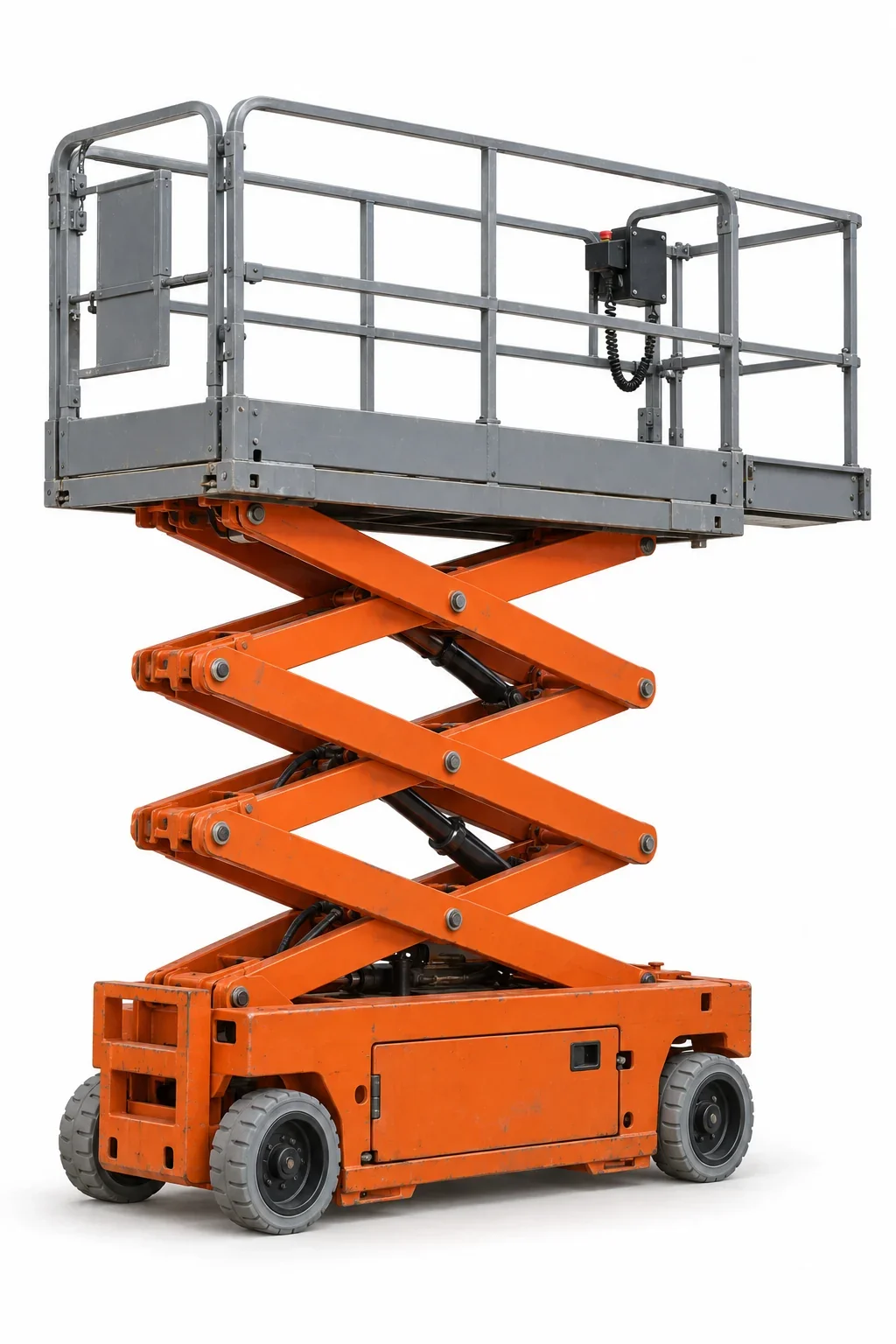
- Rolling grades in western commercial areas challenge slab units; rough-terrain scissors bring wider wheelbases and chassis leveling features to help stage on prepared ground.
- After heavy rain, Central Arkansas soils can pump under load. Ground pressure, tire type, and the bearing capacity of the pad or subgrade matter as much as platform height.
Define the job geometry first
- Direct-under work: If the platform can sit beneath signage, facades, or mechanical runs, a rough-terrain scissor provides stable vertical access and deck space for materials.
- Setback or obstructions: If landscaping, curbs, or equipment prevent close staging, compare booms at /boom-lift-rental/ for up-and-over reach.
Sizing and transport constraints
- Platform height vs. wind exposure: Elevated outdoor work is governed by the unit’s instructions and site procedures. Exposure on open pads around industrial sites can limit platform operations.
- Machine width and approach: Verify gate openings, curb cuts, and staging pads. Wider chassis improve stability but may not pass temporary fencing or tight drives.
- Weight and ground prep: Heavier units demand compacted approaches. On new builds, coordinate with site prep so the lift does not rut or bridge soft areas.
Typical Little Rock use cases
- Exterior storefront installation along sloped parking lots.
- Mechanical and electrical rough-in on unfinished pads.
- Signage and canopy work where a broad deck supports tools and materials.
Not sure which way to go?
A short call at (501) 770-2580 covering slope, soil conditions, approach widths, and task height helps determine if a rough-terrain scissor suits the site or if a boom is more efficient.